New windows and doors improve comfort, cut energy bills and add long-term value to your home. Sightline Windows & Doors Plantation pairs proven product lines with our own installing crews for lasting performance - and a price we put in writing.
1. Choose your installer
The unit is half the job - the install is the other half. Our own background-checked crews measure, set, seal and insulate every opening, and they know the lines we quote inside and out because they install them every week.
2. Select the right products
Compare styles, materials and glass packages side by side until the fit is right for your rooms, your budget and your goals. The product-line comparison below is the place to start.
3. Prepare your home for install
Before install day we walk you through a short checklist - furniture pulled back, treatments down, a clear path to each opening - so install day is watch-it-happen, not scramble.
Compare the Lines We Quote
Every project is priced on the same lines, side by side - the price indicators below are relative, and your consultant shows exact numbers on your actual openings.
PGTThe line Florida homeowners arrive naming - the most Miami-Dade certifications in the industry$$$
- More Miami-Dade NOA certifications than any other line we quote
- WinGuard, EnergyVue and ClassicVue Max systems built for every wind zone
- 99% on-time delivery keeps your install date on the calendar
CGIThe heavyweight impact line$$$$$
- Large-missile impact ratings for the strictest wind zones
- Architectural-grade aluminum with commercial-depth frames
- The line we quote when protection is the whole point
CWSThe Florida value pick$$
- Vinyl systems built in Florida for Florida codes
- Strong energy packages at the friendliest price point
- The smart start for whole-home replacements on a budget
ESWSlim lines, big glass$$$$
- Narrow-sightline aluminum for modern elevations
- Oversized openings and floor-to-ceiling glass
- Impact-rated without the bunker look
ECOThe aluminum impact workhorse$$$
- Miami-built aluminum impact systems
- A strong price-to-protection ratio for coastal homes
- Proven inventory lines with short lead times
Awning & Hopper Windows in Plantation, FL
Awning and hopper windows solve a specific ventilation problem that standard double-hung windows can’t: they let air in while keeping rain out, and they fit openings where a traditional sash won’t work. In Plantation, FL, where afternoon storms arrive fast and humidity stays high well into October, that combination matters more than it does in most places. If you’re replacing dated jalousie vents, adding ventilation to a bathroom that has none, or fitting a garden window or similar unit into a basement-level or high-wall opening, awning and hopper units are the right tool for the job.
Sightline Windows & Doors has installed and documented over 18,000 openings across South Florida since 2012, every one of them covered by a written price before a tool was lifted and a photo record when the job was finished. We carry impact-rated awning and hopper units from PGT and CGI – two lines that perform well in Plantation’s wind-zone requirements – and every window installation is governed by the Haven Standard, which means the measured survey we hand you and the final invoice are the same document. Call us at (754) 704-3597 – a live person answers, any hour – or keep reading to understand exactly what you’re buying and what it costs.
For the full picture of what we install across every window type and opening in Plantation, visit our Window Installation in Plantation page.
What Makes Awning and Hopper Windows Different
Both window types hinge on a single horizontal axis. That’s the mechanical fact that separates them from sliders and double-hungs. The difference between the two is the direction the sash swings.
An awning window is hinged at the top and opens outward at the bottom. When it’s open, the sash acts like a small awning – water sheds off the glass and over the sill rather than into the room. You’ll find casement windows and awning units most often above kitchen sinks, above fixed picture windows, and in bathrooms where the window sits close to the ceiling. Because the crank mechanism is at the bottom and the sash opens away from the wall, awning windows are easy to operate from inside even when furniture or a countertop is in the way.
A hopper window is the functional inverse: hinged at the bottom, the sash tips inward at the top. Hoppers are typically narrower and shorter than awning units. They’re common in bathrooms above shower enclosures, in utility rooms, and in any opening where the exterior side is obstructed – a fence line, a wall-mounted AC unit, or a soffit that prevents the sash from swinging outward. Because the glass tilts in, hoppers are easy to clean from inside the house.
In Plantation specifically, both types need to meet the Miami-Dade Notice of Acceptance (NOA) or Florida Product Approval requirements if they’re in a wind-borne debris region – which includes all of Broward County. Impact-rated units from PGT and CGI ship with the NOA documentation already in the package. Non-impact units with storm shutters are permissible in some applications, but we’ll tell you exactly which applies to your opening before we write anything down.
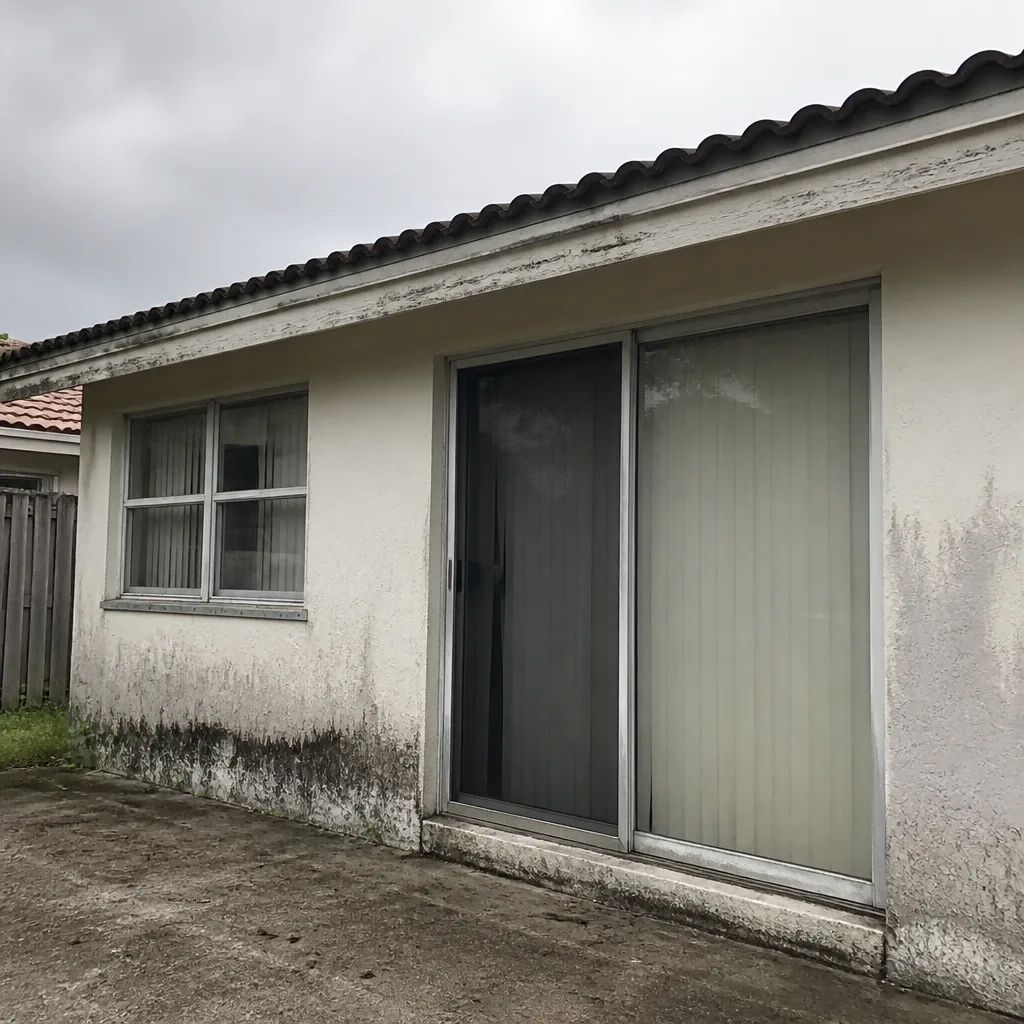 Before
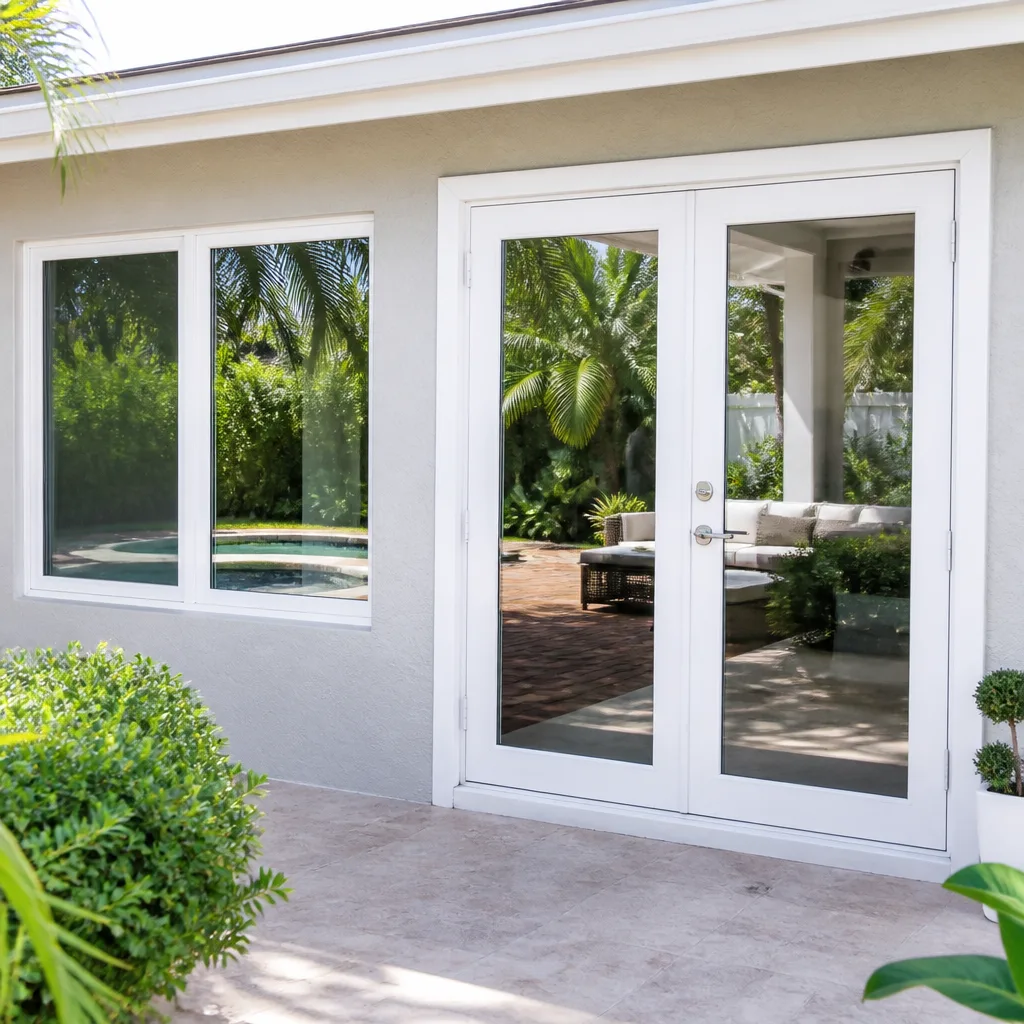 After
AfterWhen You Need Awning or Hopper Windows
- Your bathroom has no ventilation and fogged glass or mold is forming on the sill. In Plantation’s climate, a bathroom without an operable window depends entirely on exhaust fans – which fail, get blocked by insulation, or simply aren’t powerful enough. A hopper unit above the shower line moves humid air out without letting rain in and without requiring a structural change to the rough opening.
- You have a fixed picture window that needs to breathe. Many Plantation homes built in the 1980s and early 1990s paired large fixed lites with small jalousie vents. Jalousie panels were banned from new construction in Florida after the 1992 Hurricane Andrew code revisions because they fail under wind load. Replacing that vent with an awning unit – same rough opening, impact-rated glazing – brings the window assembly into compliance and eliminates the air-sealing problem jalousies are known for.
- You have a high-wall or transom opening that needs to be operable. In West Plantation and the Jacaranda area, two-story homes sometimes have clerestory windows 10 to 12 feet off the floor. A crank-operated awning unit in that position is reachable with a standard extension pole; a double-hung sash at that height is not practical to operate at all.
- You’re finishing a bonus room, garage conversion, or addition that needs code-required egress ventilation. Plantation’s building code follows the Florida Building Code residential chapter, which sets minimum ventilation area requirements for habitable spaces. Awning windows count toward that requirement when the net free area meets the calculation – we do that math as part of the measured survey, not as an afterthought.
- Your existing awning or hopper hardware has failed and the unit is no longer weathertight. The crank operators on older casement-style windows – the same mechanism awning units use – have a typical service life of 15 to 20 years in a coastal Florida environment. Salt-laden air corrodes the zinc alloy used in most operators. Once the hardware fails, the sash won’t seat fully against the frame, and the weatherstripping stops sealing. At that point, repair is rarely cost-effective; full unit replacement with a new impact-rated product makes more financial sense.
- You’re upgrading for energy performance ahead of a home sale or insurance review. Impact-rated awning and hopper units from CGI carry low Solar Heat Gain Coefficient (SHGC) glazing options – some as low as 0.19 – which reduces the cooling load on a Plantation home meaningfully. Buyers and insurance underwriters both look at product approval documentation; we include the NOA paperwork in the photo record we leave behind.
Our Awning and Hopper Window Installation Process
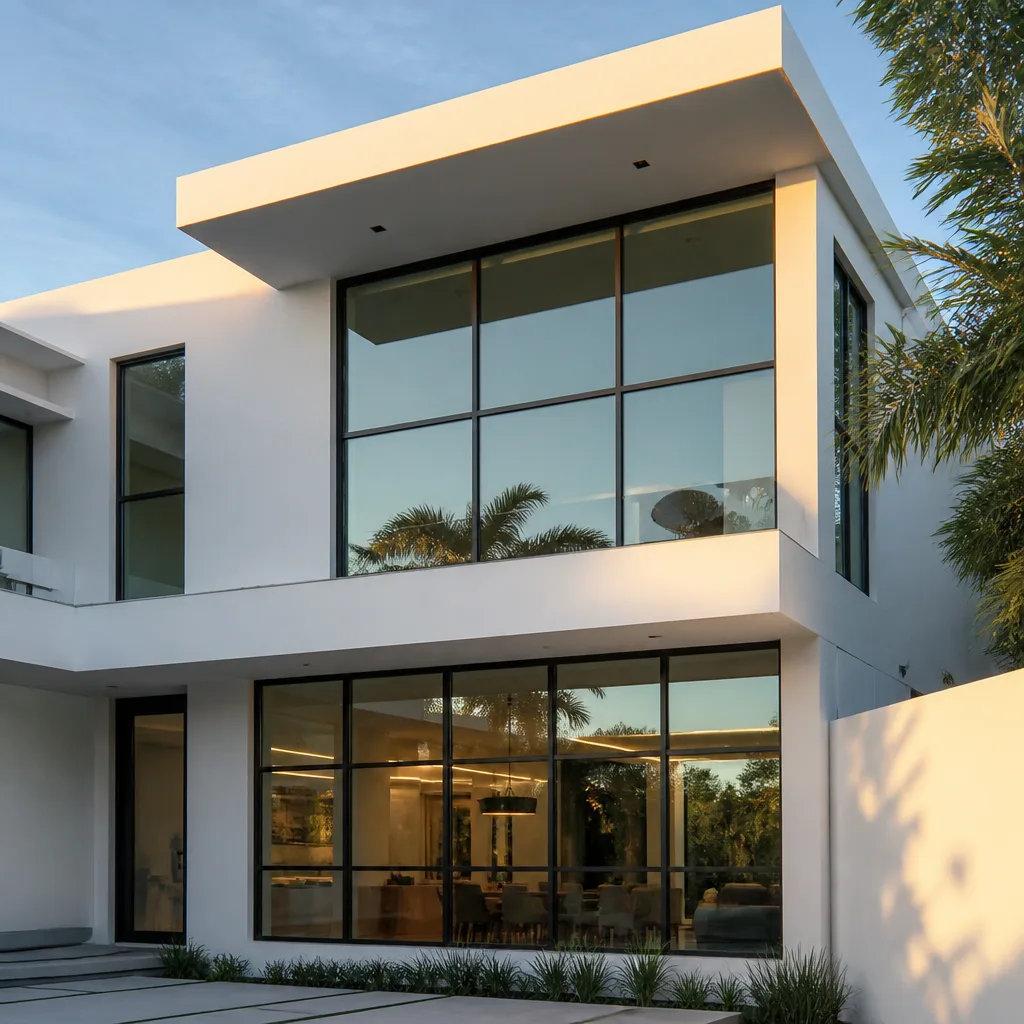
- Measured Survey – the document you keep. We schedule a site visit and measure every rough opening to the nearest eighth of an inch: width, height, diagonal (to verify square), and depth of the existing frame or buck. We note the wall construction – CBS block, frame, or ICF, all common in Plantation – the exterior finish, and any obstruction that affects the swing path. The survey sheet goes home with you. It is Haven Clause 1 in writing.
- Written Scope and Price – same document, no revision. The measured survey becomes the written scope. We specify the unit by manufacturer, series, glass package, frame color, and hardware finish. The price shown is the price on the invoice. We do not write estimates that leave room for “additional charges discovered during installation.” If we find something unexpected in the opening, we stop, document it with a photo, and talk to you before proceeding. That’s Haven Clause 5 – no surprises.
- Permit Coordination. Plantation falls under Broward County’s building department for permit jurisdiction. Window replacements generally require a permit when the rough opening size changes or when the new unit carries a different NOA than the original. We pull the permit, schedule the inspection, and handle the coordination – you don’t need to visit a building department counter. The permit number goes into the photo record.
- Installation by Background-Checked, Uniformed Technicians. Under Haven Clause 3 (Verified Crews), every technician who arrives at your door is background-checked, uniformed, and identified by license number before the visit. We remove the existing unit, inspect the rough opening and sill condition, apply sill pan flashing where required by the Florida Building Code, and set the new unit. For CBS block construction – common throughout Plantation, including the Jacaranda Estates and Midtown areas – we anchor into the masonry per the NOA installation requirements, not the minimum.
- Glazing, Sealing, and Sightline Verification. Once the unit is anchored, we install the glazing (if the unit ships with glass separate from the frame – some CGI and PGT series do), verify the sash operation through its full range, and apply low-expansion foam and exterior sealant per the manufacturer’s specified sequence. “Sightline” in trade terms means the visible frame border around the glass. We measure the sightline on all four sides before we pack up, because an uneven sightline tells you the unit isn’t square in the opening.
- Photo Record and Walk-Through. Every completed installation receives a documented photo record: before, during, and after. Haven Clause 4 (Evidence on Every Job) means you have a timestamped visual file of your opening’s condition before we touched it and its condition when we finished. We walk you through the crank operation, the locking mechanism, and the cleaning procedure for the hopper or awning sash before we leave.
Awning and Hopper Window Pricing in Plantation
Awning and hopper windows in Plantation, FL typically run $420 to $1,100 per unit installed, depending on size, glass package, frame material, and whether impact-rated glazing is required. That range covers supply, labor, standard flashing, and permit fees for most residential applications. It does not cover structural buck repairs or stucco patching if the existing opening has water damage behind the frame – we price those separately and in writing if we find them.
| Configuration | Installed Price Range (Plantation, FL) |
|---|---|
| Small hopper, non-impact, vinyl frame (bath/utility) | $420 – $580 |
| Small to mid awning, non-impact with shutter-ready frame | $480 – $650 |
| Mid-size awning, impact-rated, PGT or CGI aluminum frame | $680 – $850 |
| Larger awning (36″ x 36″ or above), impact-rated, low-SHGC glass | $820 – $1,100 |
| Hopper, impact-rated, for CBS block masonry opening | $620 – $880 |
| Multi-unit combination (awning over fixed picture window, per pair) | $1,100 – $1,800 |
Several factors move a specific job toward the higher end of these ranges. Openings in Plantation’s older CBS-block homes – particularly in subdivisions built before 1985 – sometimes have oversize or non-standard rough openings that require a custom-sized unit rather than a stock size. Custom sizing adds 8 to 12 weeks to lead time with PGT or CGI and adds to the unit cost. Frame depth also matters: if your wall is thicker than the standard 4-9/16 inch jamb depth, an extension jamb or a wider frame profile is required. And if the existing opening has rotted wood framing or a deteriorated sill, that work is priced and approved separately before we proceed – that’s the written-scope commitment, not a loophole.
Every estimate from Sightline is free and comes with a second-opinion review at no charge if you have a competitor’s written quote you’d like us to look at. The price we write is the price on the invoice. Call (754) 704-3597 to schedule a measured survey.
Key Takeaways
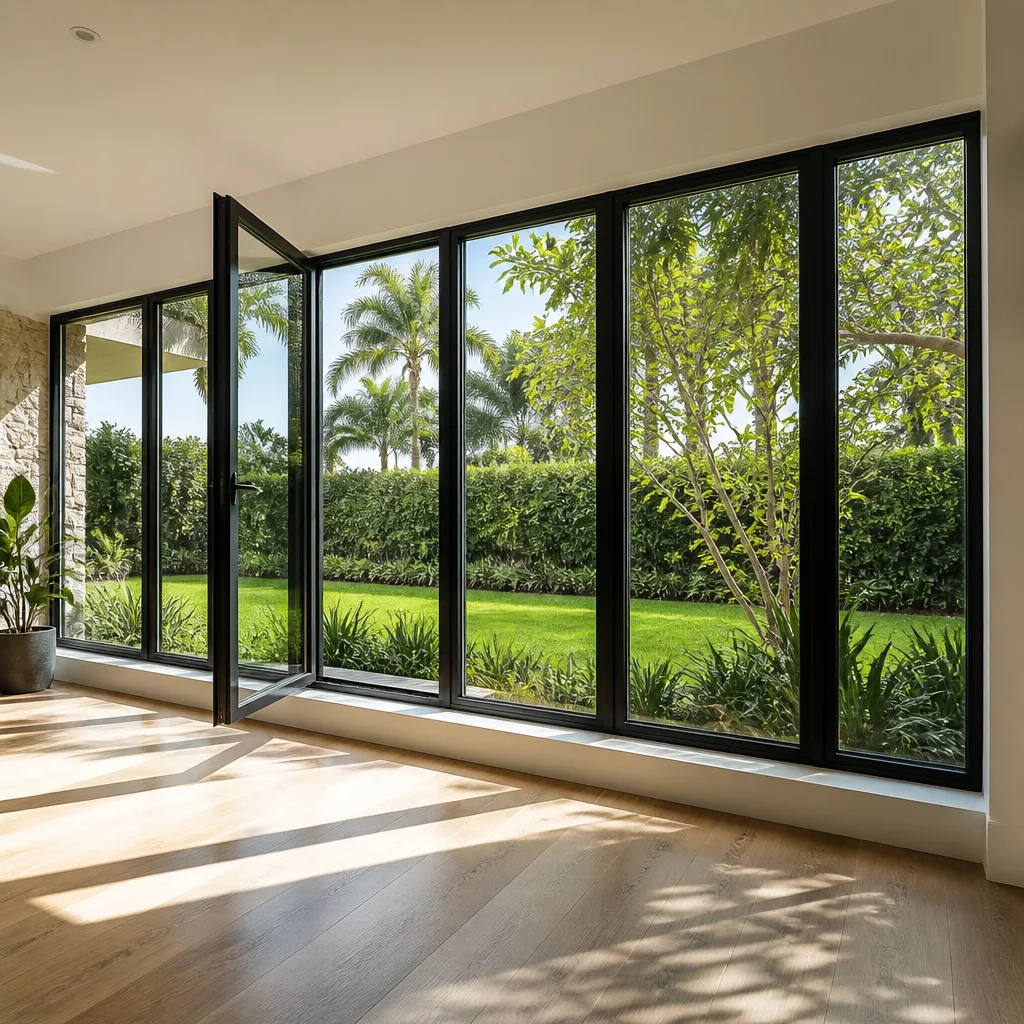
- Awning windows hinge at the top and open outward; hoppers hinge at the bottom and tip inward. Both allow ventilation without rain entry.
- All window installations in Plantation require Florida Product Approval or Miami-Dade NOA compliance – impact-rated PGT and CGI units ship with that documentation included.
- Installed prices in Plantation run $420 to $1,100 per unit for most residential applications, with the specific figure determined by size, frame material, and glass package – written before any work begins.
- Sightline’s measured survey and written scope are the same document under Haven Clause 1 – no separate estimate-to-invoice gap.
- Every job leaves a timestamped photo record and is covered by the 365-Day Done Right Promise.
FAQs – Awning and Hopper Windows in Plantation
Do awning and hopper windows need to be impact-rated in Plantation, FL?
Yes, in most cases. Plantation is located in Broward County, which falls within Florida’s wind-borne debris region under the Florida Building Code. New window installations in this zone must either use impact-rated glazing with an approved NOA, or use non-impact windows protected by an approved storm shutter system. For most residential applications, impact-rated units are the cleaner solution because they satisfy both the opening protection requirement and the wind-load requirement in a single product. We verify which applies to your specific opening during the measured survey – before anything is quoted. Call (754) 704-3597 if you’d like to talk through your situation first.
How much does it cost to replace an awning or hopper window in Plantation?
Most awning and hopper window replacements in Plantation cost between $420 and $1,100 per unit installed, including labor, standard flashing, and permit fees. Small non-impact hopper units for bathrooms typically land in the $420 to $580 range; mid-size impact-rated awning units from PGT or CGI run $680 to $850 for most residential openings. The final number depends on rough opening size, frame depth, glass package, and whether the existing opening has damage that needs addressing. The written price we give you before starting is the price on the invoice – no revision, no “we found something” add-ons without your written approval first.
Can you replace just the crank operator on an existing awning window instead of replacing the whole unit?
Sometimes, but less often than homeowners expect. Crank operators on awning windows are hardware-specific and often discontinued after 10 to 15 years. If your unit was installed before 2010, the operator is probably no longer manufactured by the original brand, and aftermarket parts rarely fit the original tolerances well enough to maintain a proper weathertight seal. More often, by the time the operator fails, the weatherstripping and the frame corners have also degraded in Plantation’s salt-humid environment. We’ll tell you honestly which is the better path – repair or replace – after we look at the existing unit, and we’ll put both options in writing if both are viable.
How long does awning or hopper window installation take in Plantation?
For a standard residential replacement – removing the old unit and installing a new impact-rated awning or hopper window into an existing rough opening without structural changes – installation time is typically two to four hours per opening. If we’re replacing multiple windows in a single visit, lead time from signed scope to installation day is usually two to four weeks for stock-size PGT units; custom-size orders from CGI run eight to twelve weeks. We schedule permit inspections concurrently with the order lead time so the inspection happens close to the installation date rather than weeks after. You’ll have a specific installation date, not a window of availability.
Why Sightline for Awning and Hopper Windows in Plantation
There’s a specific kind of frustration that comes from getting a quote that changes on installation day. The number goes up, the explanation is vague, and you’re standing in your own house without a lot of leverage. The Haven Standard exists because Sightline’s founder believed that frustration was avoidable with one rule: the measured survey and the invoice are the same document. Not close to the same. The same.
Since 2012, that rule has held across every one of the 18,000-plus openings we’ve touched. It holds on a $480 hopper window in a Plantation utility room the same way it holds on a $14,000 impact package for a Jacaranda Estates renovation. Sonia Raman leads a crew that is background-checked, uniformed, and identified by license number before they arrive at your door – Haven Clause 3, not a policy statement. And when the job is finished, you have a timestamped photo record of the opening before we touched it and after we finished, plus a 365-Day Done Right Promise in writing if anything needs to come back.
We carry PGT and CGI awning and hopper units across multiple performance tiers, and we specify by what your opening requires – not by what’s easiest to move. If you want to understand what the broader scope of Window Installation in Plantation looks like before narrowing to a specific window type, that page has the full picture. Or start here, with a specific opening you have in mind.
Call (754) 704-3597 to schedule a free measured survey. A live person answers. The written price follows the survey – it’s the same document – and it costs you nothing to have it in your hands.
Written by Sonia Raman, Owner at Sightline Windows & Doors Plantation, serving Plantation.
Six Reasons Homeowners Choose Sightline Windows & Doors Plantation
Impact systems engineered to design pressures up to +/-100, matched to your wind zone - your openings hold when the storm arrives.
Low-E insulated impact glass from our manufacturer lines commonly cuts monthly cooling bills 20-30%.
Laminated impact glass shuts out up to 40% of outside noise - traffic, neighbors, weather.
Monitoring services run $30-90 a month. Laminated impact glass resists forced entry around the clock, with no subscription.
Florida homeowners average around 25% savings on the windstorm portion of their policy after protecting every opening - some homes qualify for more.
A full impact package upgrades curb appeal, buyer confidence and appraised value in one project.
Other Sightline Windows & Doors Plantation Services